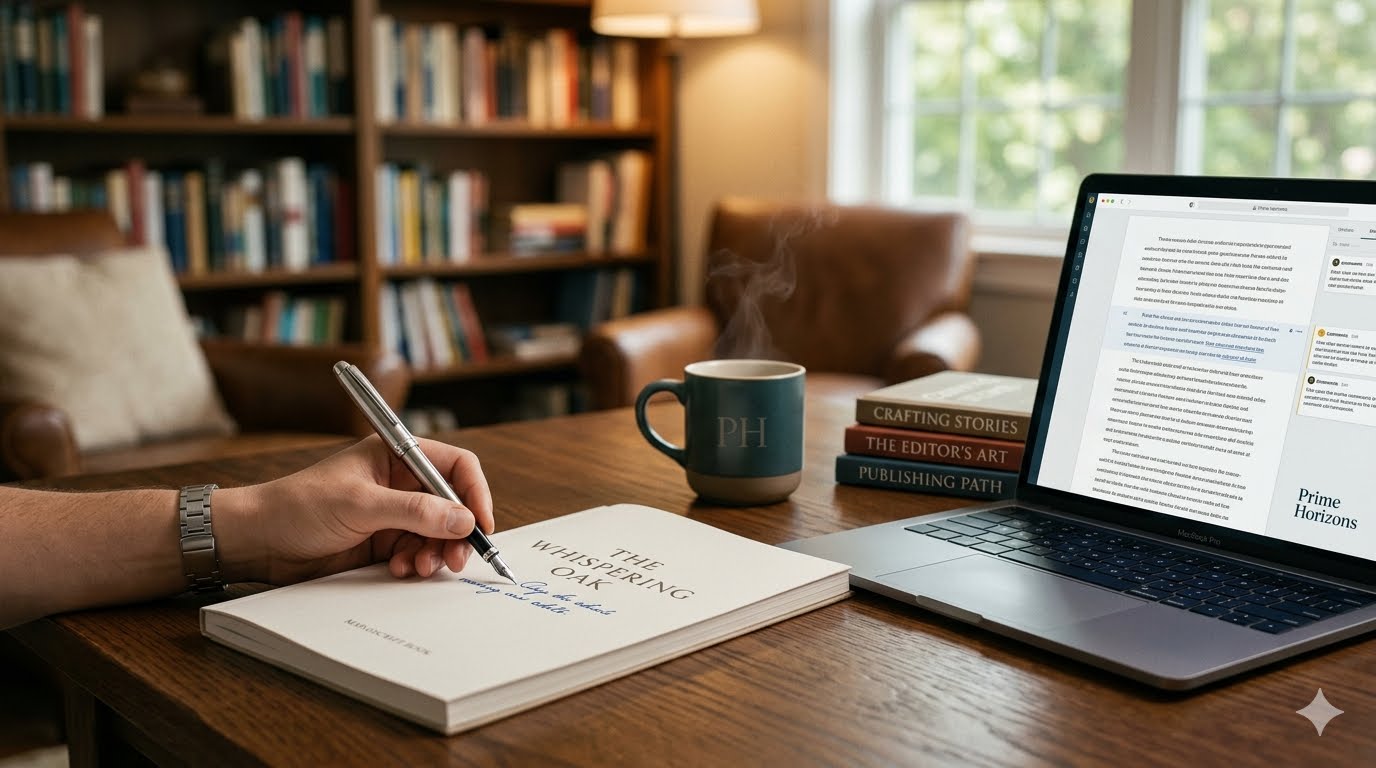
Professional Line Editing & Manuscript Editing Services for Writers
The Prose Polish (Standard Line Edit)
- Elevate Your Voice: We polish your unique writing style, ensuring your tone remains consistent and impactful from the first page to the last.
- Enhance Rhythm & Flow: We reshape awkward sentence structures and smooth out transitions so your readers stay fully immersed in your world.
- Vivid Word Choice: We replace weak verbs, repetitive phrasing, and clichés with precise, evocative language that brings your scenes to life.
The Manuscript Trimmer (Prose Tightening)
- Eliminate Redundancy: We cut out fluff, filter words, and repetitive ideas without changing your core message or story.
- Tighten the Narrative: We transform passive, wordy sentences into crisp, active prose that keeps your story moving forward.
- Dynamic Dialogue: We sharpen your characters' spoken words, making their conversations sound natural, distinct, and purposeful.
The Masters Package (Line Editing + Technical Copyedit)
- Deep Stylistic Polish: We dive deep into sentence-level craftsmanship, optimizing your "show, don't tell" elements and sensory details.
- Mechanics & Grammar Check: After perfecting the style, we run a thorough copyedit to fix grammar, punctuation, spelling, and syntax errors.
- Submission Ready: You receive a clean, beautifully polished manuscript that meets professional publishing standards and is ready for publishers and readers.
Flexible Pricing Rates & Options
We offer transparent pricing models tailored to your preference, equivalent to a professional baseline rate of $40 per hour.
- By the Word: $0.04 per word. Ideal for a fixed, locked-in budget based exactly on your document's final word count.
- By the Standard Page: $10.00 per page. Calculated using the industry-standard framework of 250 words per page.
- By the Hour: $40.00 per hour. Perfect for custom projects, short revisions, or targeted, spot-checked editing passes.
Convenient, secure electronic invoicing and payments are handled exclusively through PayPal.com.
Why Most Authors Avoid Using AI
Artificial intelligence can be a useful tool for brainstorming and research, but authors should think carefully before allowing AI to write any portions of your manuscript. The greatest strength of fiction is not efficiency; it is originality. Readers are looking for a unique voice, a fresh perspective, and the emotional truth that comes from human experience. AI generates text by drawing on patterns found in existing writing. While the results may appear polished on the surface, they often lack the deeper insights, lived experiences, and unexpected creative choices that make memorable fiction endure.
There are also practical concerns. Some publishers, agents, contests, and literary magazines now require authors to disclose the use of AI-generated content. Policies vary widely, and some organizations restrict or discourage submissions that rely heavily on artificial intelligence. Even when AI-generated work is permitted, authors may find themselves facing additional scrutiny regarding originality, copyright questions, and the extent of machine involvement in the creative process.
Another issue is creative censorship. AI systems are designed with safeguards and restrictions that can influence the stories they generate. Certain themes, subjects, character portrayals, or narrative choices may be softened, avoided, or reshaped by the system's built-in limitations. As a result, writers who depend heavily on AI may discover that their stories gradually conform to the boundaries established by software developers rather than their own artistic instincts.
Finally, there is the question every author must answer: whose voice is on the page? Readers do not buy novels because they are grammatically correct or structurally efficient. They buy them because they connect with a storyteller. The quirks, passions, obsessions, flaws, and life experiences of a human writer are often what transform a competent manuscript into a compelling one. AI can imitate style, but it cannot replace the individual perspective that gives great fiction its soul.